

This blog post is based on a presentation I gave at the Australian Dispute Centre conference in Sydney in May this year.
Navigating a Sea of Conflict
Put your hand up if:
You can swim.
You’ve ever been caught in a rip.
You’ve ever been scuba diving.
You can navigate underwater.
You’ve ever been night diving.
Or cave diving.
Or scuba diving with sharks.
Been stung by a jellyfish?
Or — maybe most impressive — you can talk underwater?
Conflict can feel a lot like deep water.
Some people move through it with ease. Others are just struggling to stay afloat.
As conflict resolution professionals, we tend to feel pretty confident in those waters. We know the currents, we understand the depths, we’ve got the right tools to breathe underwater and regulate our buoyancy — and frankly, we’re not scared of sharks.
But our clients? That’s a different story.
Some of our clients have never learned to swim.
Some panic the moment they’re submerged.
Some are terrified of what’s under the surface — and with good reason, based on past experiences.
Some have never even seen the ocean before, and now they’re being asked to navigate it.
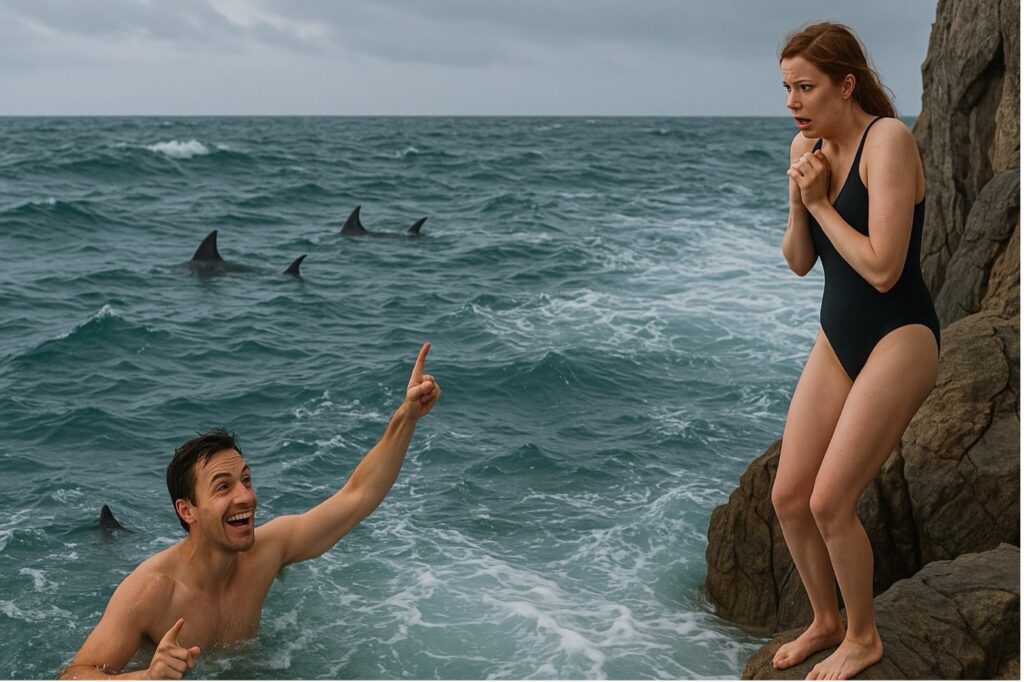
Yet we often call out to them, smiling from the surf:
“Come on in, the water’s fine! Don’t be scared — we’re here to help!”
And there’s another layer to this.
Sometimes the people we think will struggle the most actually have unique abilities when it comes to the sea of conflict.
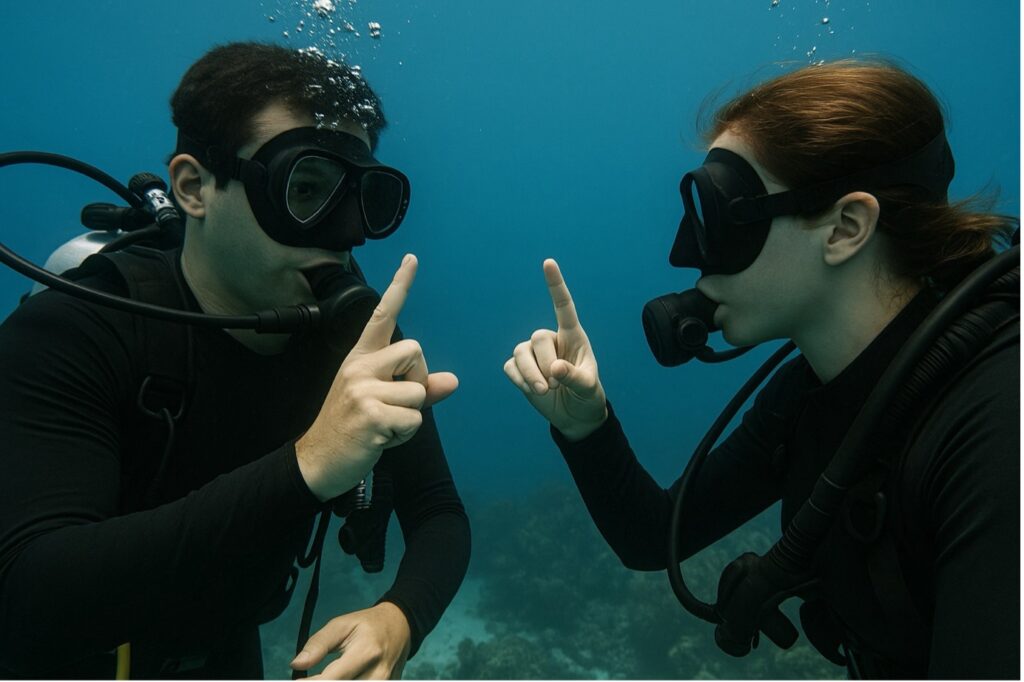
Someone who uses a letter board or sign language?
They can already communicate underwater better than most of us.
Someone who knows the currents, or has a passion for sharks, or an eye for tiny nudibranchs?
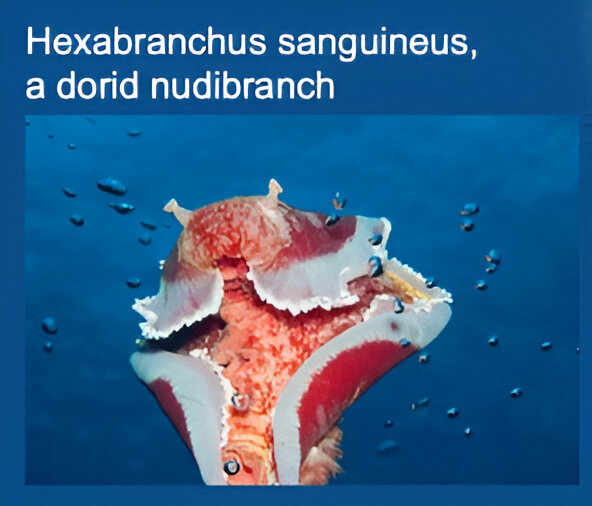
They might pick up things in the conflict landscape that we completely miss.
People with different ways of seeing the world often bring huge strengths when navigating complexity — if we know how to work with them.
And this brings me to the heart of what I want to say:
Many neurotypical practitioners are so comfortable in mediation that we forget how strange and overwhelming it can feel to others.
For some neurodivergent clients, it’s not just hard — it’s terrifying.
But that doesn’t mean they can’t do it. It means we need to find better ways to support them — to help them reach the shores of resolution without drowning along the way.
Neurodivergent individuals bring enormous value to mediation and conflict resolution processes.
But when we don’t understand how neurodivergence might show up, it’s easy — too easy — to misinterpret behaviour.
We might see someone taking longer to respond, or communicating differently, and label it as resistance or non-compliance. We might call them a “high-conflict personality”.
We might subtly lose our impartiality without even realising it.
And when that happens, we’re not just being unfair. We’re actually putting barriers in the way of resolution.
Another risk is that we confuse neurodivergence with mental incapacity.
Let’s be clear: anyone under extreme stress — neurodivergent or not — can have their nervous system tip into fight, flight, or freeze. And when that happens, higher-order thinking, like decision-making or perspective-taking, becomes a lot harder.
The difference is that for many neurodivergent participants, the baseline stress load is already higher.
And our typical ways of mediating can make this worse.
We must stop assuming that struggling with a rigid process is the same thing as lacking capacity.
Let’s take a look at some of the ways traditional mediation processes can be challenging for neurodivergent clients:
Mediations are often face-to-face, in unfamiliar environments.
Sessions are usually compressed into intense blocks of time, assuming quick communication, emotional regulation, and fast information processing.
The process is structured around a series of stages — each with its own unspoken rules.
There’s a strong expectation of verbal communication and emotional self-regulation throughout.
Mediators often rely on perspective-taking and brainstorming as core strategies.
And most mediators, to be honest, have only basic training in understanding neurodiversity — which means blind spots are common.
For neurodivergent participants — particularly those with sensory processing or emotional regulation differences — the cumulative load can be enormous.
Before they even walk into the room, they might already be close to overwhelm.
Some practitioners invite clients to request accommodations if needed. However, when we frame flexibility as something “special” that only certain people need, we subtly position the individual as the problem.
In contrast, when we design flexibility into the whole system, we make it easier for everyone to participate — without needing to single anyone out.
Why not rethink mediation so it works better for everyone — from the start?
To get to the shores of resolution:
Some clients need to move slowly and carefully.
Some want to jump right in.
Some need a wetsuit for warmth and buoyancy.
Others need a mask and snorkel.
Some need scuba gear and a shark cage.
And some will only feel safe in a boat or a submarine.
We’re not here to judge how they get across.
We’re here to help them reach the shore.
And there are many different ways to get there.

Take a moment and reflect on the amount of flexibility in-built in the processes you offer to clients.
To be truly inclusive, it’s not enough to be an expert swimmer.
Instead, be a lifeguard.
Don’t just try to teach clients how to swim better — design processes that help keep them afloat.
Don’t assume conflict resolution feels and works the same for everyone — build systems that work for diverse needs.
And don’t guess what people need — engage directly with neurodivergent voices to truly understand what makes resolution accessible.
If we do that — if we reimagine our processes with inclusivity and flexibility at their core — we not only make mediation better for neurodivergent clients, but for everyone.
The journey to more inclusive practice isn’t quick or easy.
It demands courage, creativity — and a willingness to rethink what we thought we knew.
If you would like to know more about neurodiversity and conflict, here are some webinars on demand The Conflict Management Academy offers on the topic:
Neurodiversity and conflict: https://conflictmanagementacademy-stg.tangiblelaunchpad.com/webinar-on-demand-neurodiversity-and-conflict/
Neurodiversity and mediation: https://conflictmanagementacademy-stg.tangiblelaunchpad.com/webinar-on-demand-neurodiversity-and-mediation-registration/
Rethinking neurodiversity in practice: https://conflictmanagementacademy-stg.tangiblelaunchpad.com/webinar-on-demand-rethinking-neurodiversity-in-practice/
Want to access all three webinars in a special discounted package? https://conflictmanagementacademy-stg.tangiblelaunchpad.com/product/neurodiversity-webinar-package/