
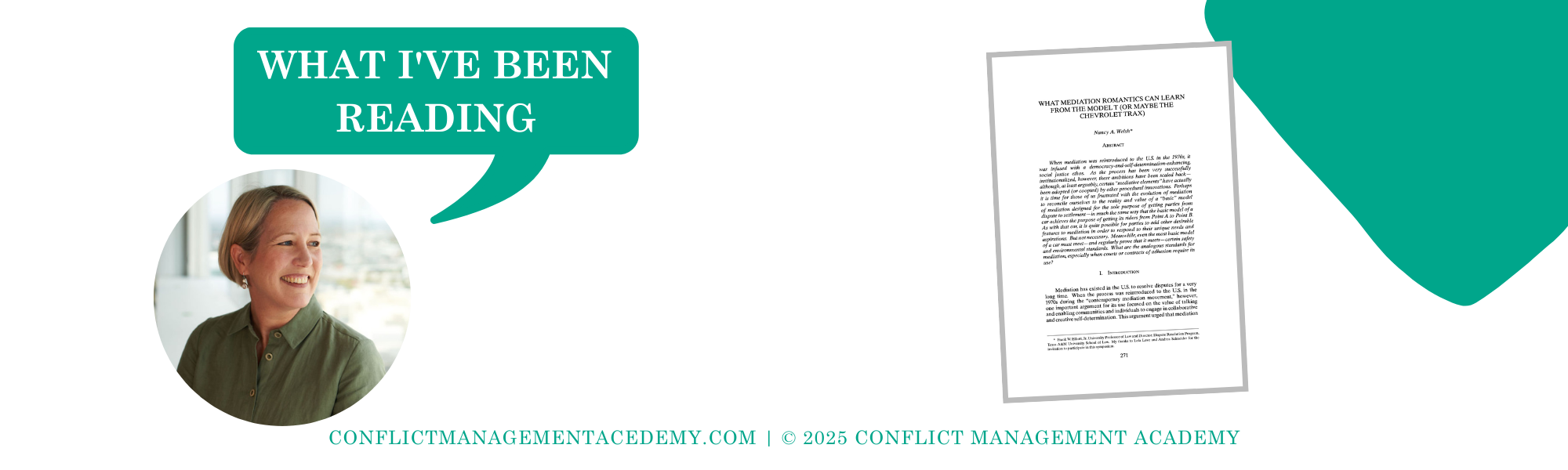

WHAT I’VE BEEN READING: What mediation romantics can learn from the Model T, by Nancy Welsh
While this article is about the development of mediation as a field in the U.S. most of the points made apply equally to the Australia context. Welsh describes the idealised introduction of mediation in the 1970s as a “democracy-and-self-determination-enhancing, social justice ethos” which then became

Why Good Conflict Management Is Essential for Psychosocial Safety
Imagine walking into a workplace where people feel anxious, silenced, or wary of one another. Collaboration slows. Creativity wanes. Absenteeism creeps up. Resignations start to pile in. What you’re witnessing isn’t just poor culture—it’s a breach of psychosocial safety. For leaders navigating an increasingly complex
Now’s the Time to Train as a Mediator!
If you’ve been thinking about gaining formal mediation skills — whether to launch your own conflict resolution practice, strengthen your leadership or HR capabilities, or simply become a more skilled communicator — this is your opportunity. The Conflict Management Academy is offering a brand-new Facilitative

Co-Mediation: A Reflective Guide to Working Together in Conflict Resolution
Most mediators begin their journey solo — managing the process, reading the room, responding to shifting dynamics, and carrying the emotional load of conflict all on their own. But what happens when two mediators share that space? Co-mediation is a powerful alternative model where two

Growing a Mediation Practice: Practical Insights from the Field
The Conflict Management Academy offers regular Business Brainstorming Sessions as an accompaniment to our Beyond the Table course. These sessions are facilitated by experienced mediator and successful business owner Megan Lewis. Here are some of the key insights and tips shared in the last session.

Can a Mediator Provide Advice? Understanding the Boundaries in Australia
By Samantha Hardy and Claire Holland Mediators play a crucial role in helping parties resolve disputes, but can they actually provide advice? The answer is more nuanced than it may initially appear. In Australia, mediation is predominantly a facilitative process, meaning mediators do not make