
When we walk into a workshop or classroom, one of the first things we notice is how varied people are. Tall and short, loud and quiet, confident and hesitant. But sometimes it helps to step back from those obvious differences and look at something we rarely think about: eye colour. It’s a simple feature, but it gives us a surprisingly useful way to think about diversity, typicality, and divergence. And, as with most analogies, the more we sit with it, the more it opens up.
Diversity: The Range That Exists
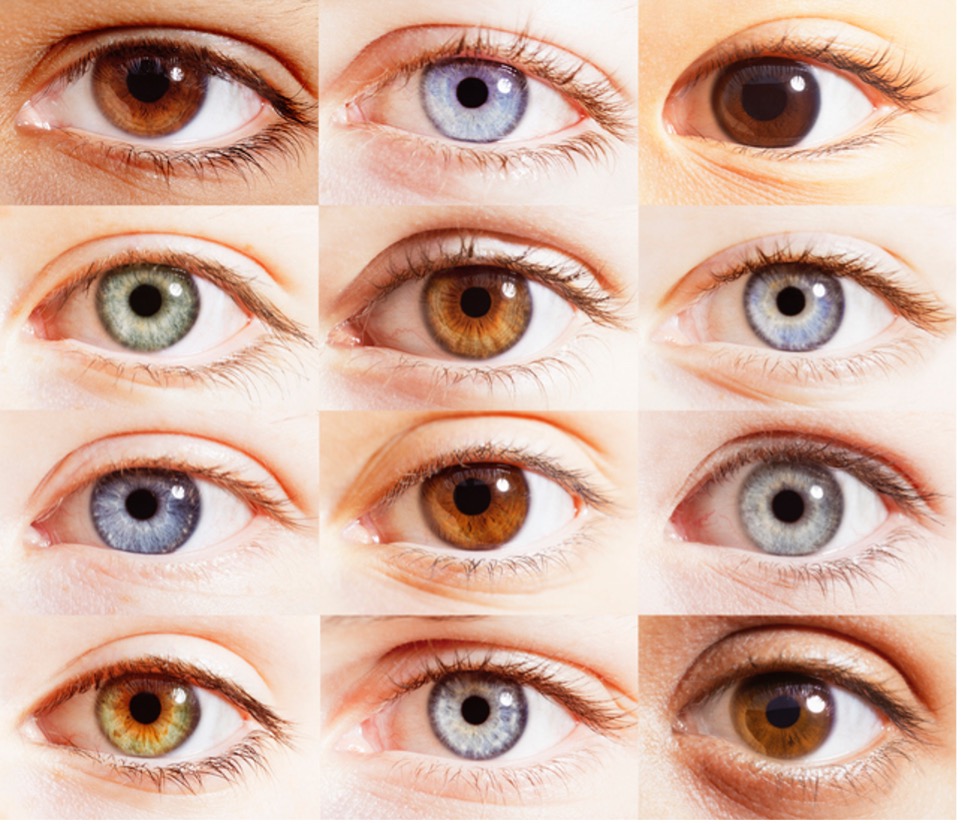
Every group of people contains diversity. If you look around a room, you’ll see a variety of eye colours: blue, brown, green, hazel, grey. Diversity, in this sense, is simply the fact of variation. It does not assign value. It doesn’t say one is better than the other. It just acknowledges difference as part of the landscape.
When we talk about neurodiversity, we are pointing to the same reality. Human brains, nervous systems and bodies come in many forms. Some people process information quickly, others slowly. Some thrive in highly structured environments, others in open, flexible ones. Some communicate directly, others more subtly. Just like eye colours, the variations are natural and expected. Diversity is not about one being right and another being wrong. It is about recognising the range of human ways of being.
Typical: What’s Most Common in a Place and Time
In Australia, blue eyes are common. In many Asian countries, brown eyes are the most common. That simple fact changes what counts as “typical” depending on where you are. A person with blue eyes in Sydney may blend into the crowd. The same person in Beijing may stand out. Typicality, then, is not universal. It is contextual. It is a statement about numbers, not about value.

This distinction is crucial when we think about neurotypicality. The term “neurotypical” is often used as if it describes a fixed category of people who process the world in a standard way. But the “typical” is really just the most common way of doing things in a particular context. In some workplaces, for instance, the typical expectation might be that everyone communicates in face-to-face meetings. In other places, it may be that everyone communicates via slack. Typicality is shaped by environment, culture, and history. It shifts as those contexts shift.
Divergence: When You Fall Outside the Typical
Now imagine a blue-eyed person in Asia. They are not unusual in the world, but in that specific context, they diverge from what is most common. Their difference is visible, but it doesn’t mean it is bad or defective. It simply means they are not in the majority. The divergence is relative.
In the same way, when we speak of neurodivergence, we are talking about people whose ways of thinking, sensing, or behaving diverge from the most common expectations in their environment. A neurodivergent person may be in the minority in one context and in the majority in another. Consider a group of engineers who are highly detail-focused and process-oriented. In that environment, what might look divergent in another workplace is actually typical. The labels of “divergent” and “typical” are not absolute truths. They are relational, shaped by the norms around them.
The Danger of Fixed Assumptions
This brings us to one of the central lessons of the eye-colour analogy: our assumptions about what is “normal” are more fragile than we think. They depend on context. Yet we often treat them as universal.
Take the example of eye contact. In many parts of Australia, failing to make eye contact in a conversation is seen as a sign of disinterest, evasiveness, or even rudeness. In many Western countries, discomfort with eye contact is used as a key diagnostic trait for autism. But shift the context to another culture and the meaning reverses. In Japan, prolonged eye contact can be considered aggressive or disrespectful. In many First Nations communities, avoiding direct gaze is a way of showing deference and respect. What is read as a “symptom” in one culture may be read as good manners in another.
This is why we need to be cautious about equating typicality with universality. If we assume that the most common way of doing things in our own environment is the right way, we risk mislabelling or pathologising people whose behaviour makes perfect sense in a different context. The same person may be viewed as divergent in one setting and typical in another, without anything about them changing. The shift is in the eye of the beholder.
Variation Within Types
It is tempting to sort people into categories and stop there. Blue eyes, brown eyes, green eyes. But categories only tell part of the story. Within each group there is enormous variation. Not every blue-eyed person looks the same. Some eyes sparkle like ice, others glow like sapphires. Even two siblings with “blue eyes” may have strikingly different shades.
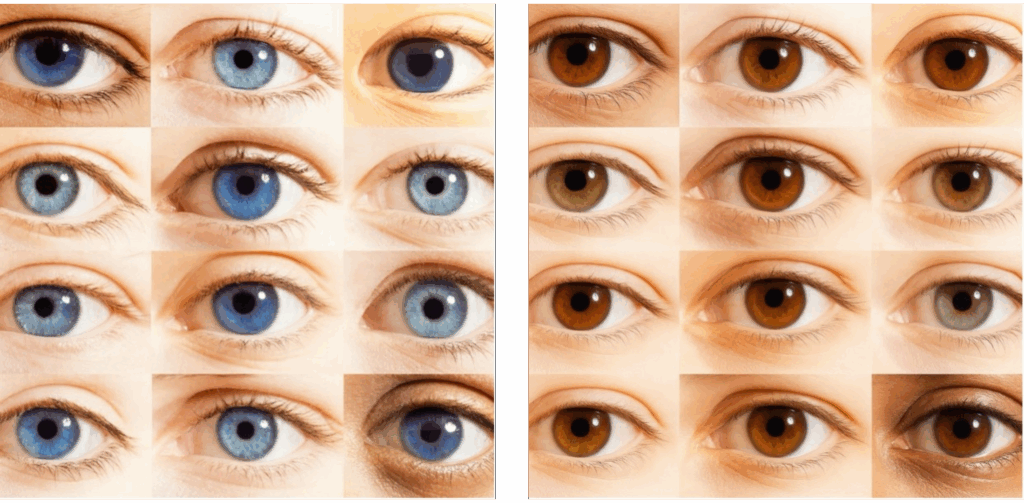
The same holds true for neurodiversity. Within autism, ADHD, dyslexia, or any other category, the range of individual experience is immense. Some autistic people may avoid eye contact, others may not. Some may crave routine, others may embrace spontaneity. Some are hyper-sensitive, others are hypo-sensitive. The labels are useful for simplification, but we need to remember that they are just that – simplifications! They should not erase the complexity within. Just as blue eyes come in endless shades, so do human ways of thinking and being.
Power and Perception
Eye colour may seem like a neutral feature, but even here, power plays a role. In certain eras, blue eyes were idealised in Western societies, attached to ideals of beauty, purity, or desirability. That cultural bias shaped perceptions and created hierarchies of value. The same is true of neurotypicality. The “typical” is often given more legitimacy, more authority, more access. Those who diverge may find themselves excluded or judged, not because their way of being is wrong, but because the system is designed around the majority.
Recognising this power dynamic is essential. Diversity itself is not the issue. The issue is how we treat difference. Do we value it as part of the richness of human variation, or do we treat it as a problem to be fixed? The answer often determines whether people feel included or marginalised.
Shifting the Frame
What happens if we stop seeing divergence as deficiency and start seeing it as difference? The eye-colour analogy helps here too. Imagine if society decided that only blue eyes were acceptable. People with brown or green eyes would be forced to wear coloured contacts. Their natural eyes would be pathologised, their difference erased. We would recognise the absurdity of that demand. Yet in many ways, this is what happens to neurodivergent people. They are often asked to mask their natural ways of being, to fit themselves into a mould built for someone else. The cost is high: exhaustion, shame, loss of identity.
But when we accept the full spectrum of eyes as natural, the whole picture changes. We no longer ask why someone does not have blue eyes. We simply acknowledge that eyes come in many colours. In the same way, embracing neurodiversity means recognising that brains come in many forms. Some are more common, some less, but all are part of the human tapestry.
Lessons for Practice
For those of us working in conflict resolution, education, or any field that involves human interaction, these insights are more than theoretical. They have direct implications for practice.
Stay alert to context. What counts as typical in one environment may be divergent in another. Avoid making assumptions about what is appropriate without considering place, culture, and history.
Look beyond the label. Categories can be helpful, but they hide variation within. Take time to understand the individual in front of you rather than relying solely on the category.
Challenge power dynamics. Notice when typicality is being used as a standard of legitimacy. Ask whether systems are privileging some ways of being at the expense of others.
Value difference. Treat divergence as part of the richness of diversity, not as a flaw to be corrected. Create spaces where people can bring their authentic selves without needing to mask.
A Final Reflection
When we notice eye colour, we rarely pass judgment. We may admire it, remark on its shade, or simply accept it as part of a person’s appearance. We know without question that variety is natural and expected. If we could approach neurodiversity with the same instinct, much of the stigma would disappear. Typicality would still exist, but it would lose its power to define what is right or wrong. Divergence would be seen not as a problem but as part of the broader spectrum of human life.
So next time you look around a room, pay attention to the eyes. Notice their diversity, the variations within types, the ways typicality shifts depending on where you stand. Let it remind you that difference is everywhere, and that what we call divergence is often just another shade of being. The lesson is simple, but its implications are profound: human variety is natural, contextual, and valuable. The challenge is not to erase it, but to learn to see it clearly.